
The Lenten Weekdays Get Their Introits and Collects
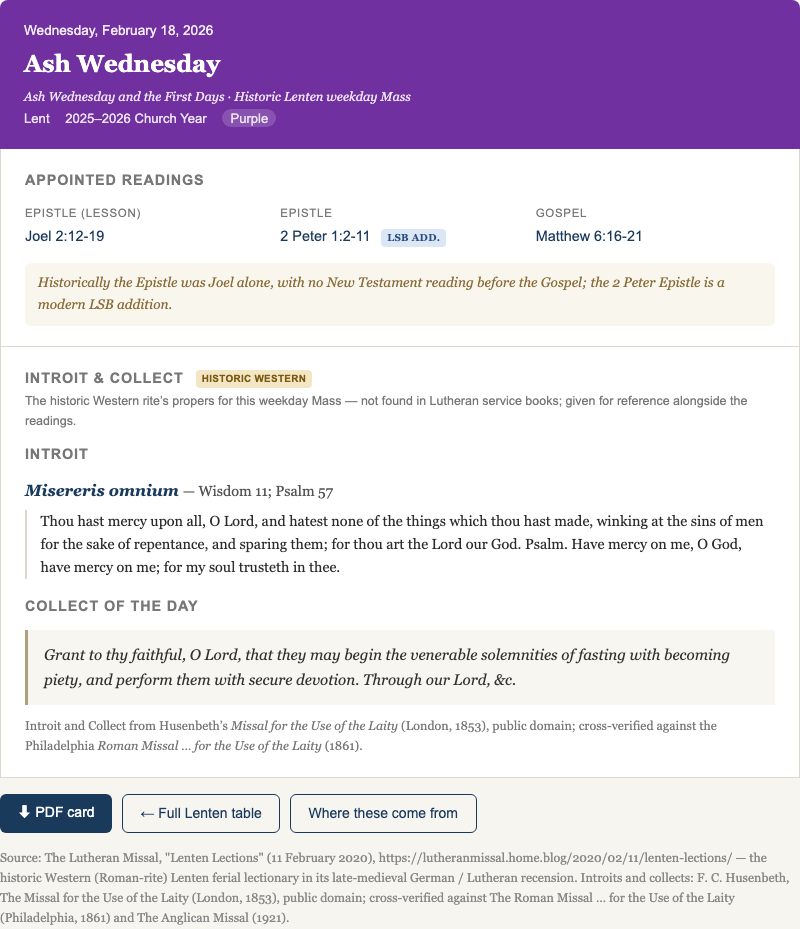
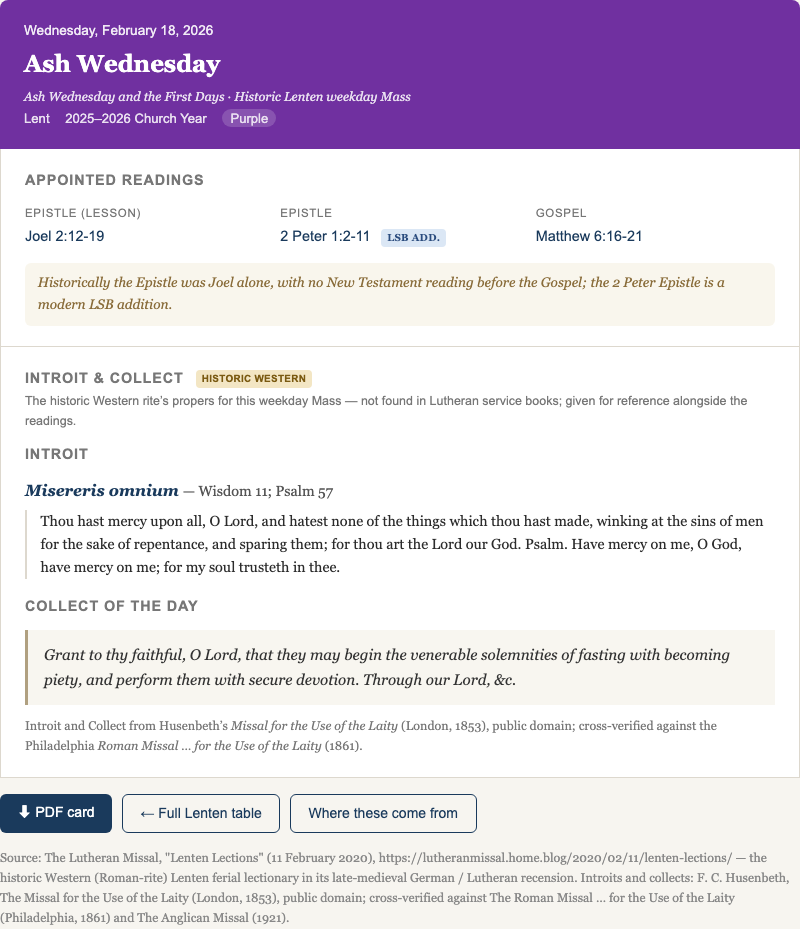
With version 1.3.0 of the Lutheran Lectionary, the Historic Lent section takes its next step: every Lenten weekday's card now shows the Mass's proper introit and collect alongside its readings — thirty-eight days of them, Ash Wednesday through Maundy Thursday, in public-domain English.
When the Lenten ferial lectionary shipped last month, it answered the question what was read on the weekdays of Lent — the one season of the year for which the historic Western rite appointed proper lessons for every single day. But a Mass does not begin with its lessons. It begins with an introit — an antiphon and psalm verse that names the day's whole character — and gathers itself in the Collect of the Day. Those were missing. Now they are there.
Honest labels: these are not Lutheran texts
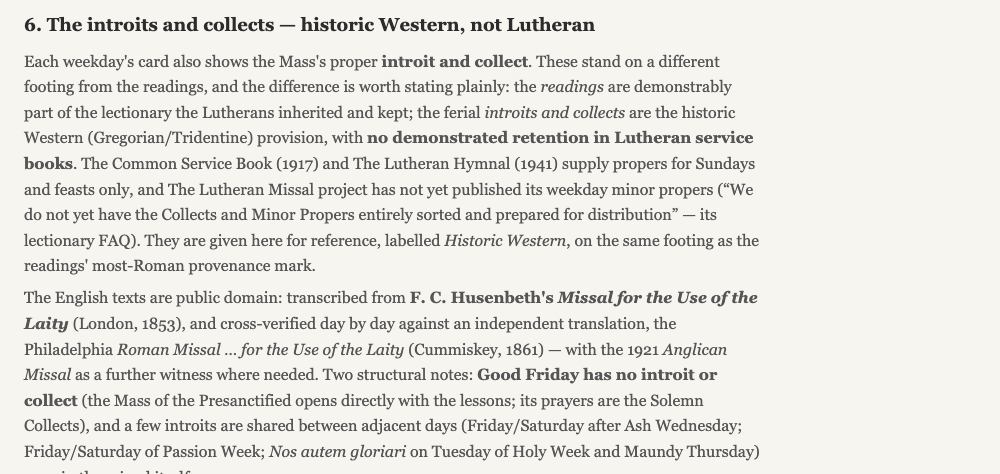
The readings and the propers stand on different historical footings, and the app says so plainly. The weekday readings are demonstrably part of the lectionary the Lutherans inherited from the late-medieval German missals. The weekday introits and collects are not: the Common Service Book of 1917 and The Lutheran Hymnal of 1941 supply propers for Sundays and feasts only, and no Lutheran source I could verify carries the ferial set. So each card labels them Historic Western — the old Roman rite's provision, given for reference beside the readings, on the same footing as the "most Roman" provenance mark the reading tables already use. The sources page lays out the whole argument.
Where the texts come from
The standing rule of this project is that it publishes only two kinds of content: facts, and public-domain text. The English here is transcribed from F. C. Husenbeth's Missal for the Use of the Laity (London, 1853) — a Latin-English missal whose copyright expired generations ago — and, because a second witness is required before any liturgical text ships, every day's introit and collect was cross-checked against an entirely independent translation, the Philadelphia Roman Missal for the Use of the Laity of 1861, with the 1921 Anglican Missal called in as a third witness for Holy Week. All thirty-eight days agree across witnesses. Both source scans are linked from the sources page, so anyone can check the checking.
The old missal has its own personality, and the cards keep it rather than smoothing it away:
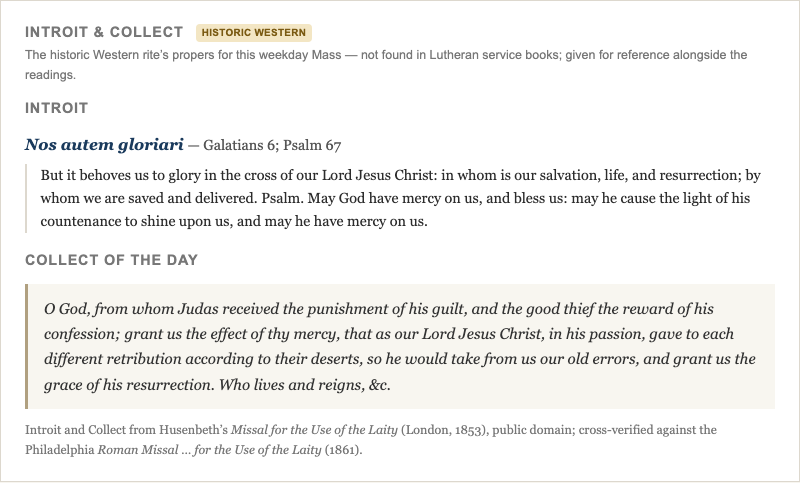
- Shared introits. The Saturday after Ash Wednesday simply repeats Friday's Audivit Dominus; Friday and Saturday of Passion Week share Miserere mihi Domine; and Nos autem gloriari — "But it behoves us to glory in the cross of our Lord Jesus Christ" — serves both Tuesday of Holy Week and Maundy Thursday. So in the missal itself; each card says so.
- A collect with saints in it. Thursday of the third week prays "May the blessed solemnity of thy saints Cosmas and Damian magnify thee, O Lord" — because the day's ancient Roman station was at their basilica. A fixture of the old book, kept as printed, with a note explaining why two physician-martyrs turn up in the middle of Lent.
- Ember Days. The Ember Saturday of Lent is the ancient day of many prophecies — five lessons, each with its own collect. The card gives the Collect of the day and notes the structure.
And Good Friday has none — on purpose
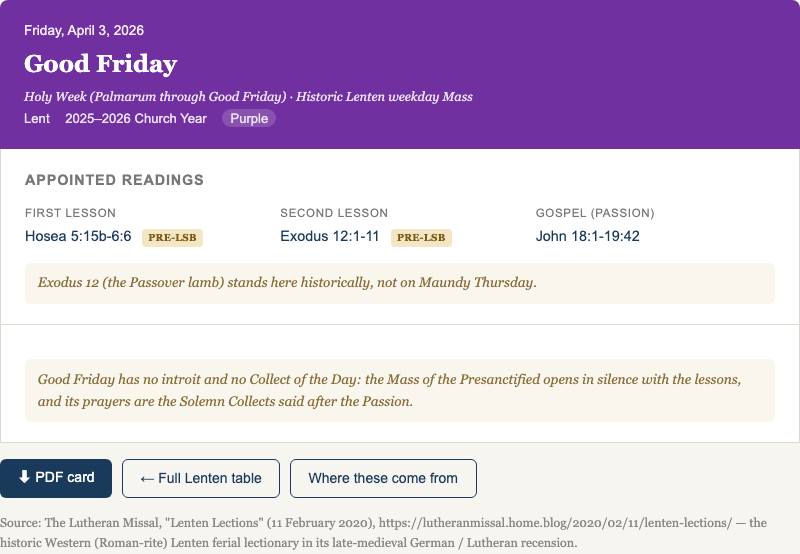
One day is deliberately without an introit or collect, and the card explains rather than papers over it: on Good Friday the Mass of the Presanctified opens in silence, directly with the lessons, and its prayers are the Solemn Collects said after the Passion. An empty field would look like an oversight; the note makes it what it is — the rite's own austerity.
Everywhere the day cards go
The propers ride along wherever the cards do: the one-page PDF day cards now include the introit and collect with an accurate source line, so a bulletin insert for, say, Ember Wednesday carries the whole historic Mass — lessons, introit, collect — on a single sheet.
Version 1.3.0 is live at lectionary.collver.biz, and the Docker image is on GitHub for anyone running it at home. As always: free, open-source, nothing under copyright reproduced, and every text traceable to the page it came from.


Comments ()